Custom Software vs. Off-the-Shelf Software: Which One Is Right for Your Business?
In today’s business environment, technology is essential. It is no longer just a support tool—it is a central part of corporate strategy. Executives must make key decisions, such as how to structure their technological ecosystem. One of the most important is whether to choose off-the-shelf software or invest in a custom-built solution.
Off-the-shelf software is like a product sold in a store, with features designed to serve a broad range of businesses. Custom software, on the other hand, is developed from the ground up to meet the specific needs of each company. It is designed and built to match exactly how a business operates.
Flexibility and Adaptability: The Key Difference
The key question is: Should your business adapt to the software, or should the software adapt to your business?
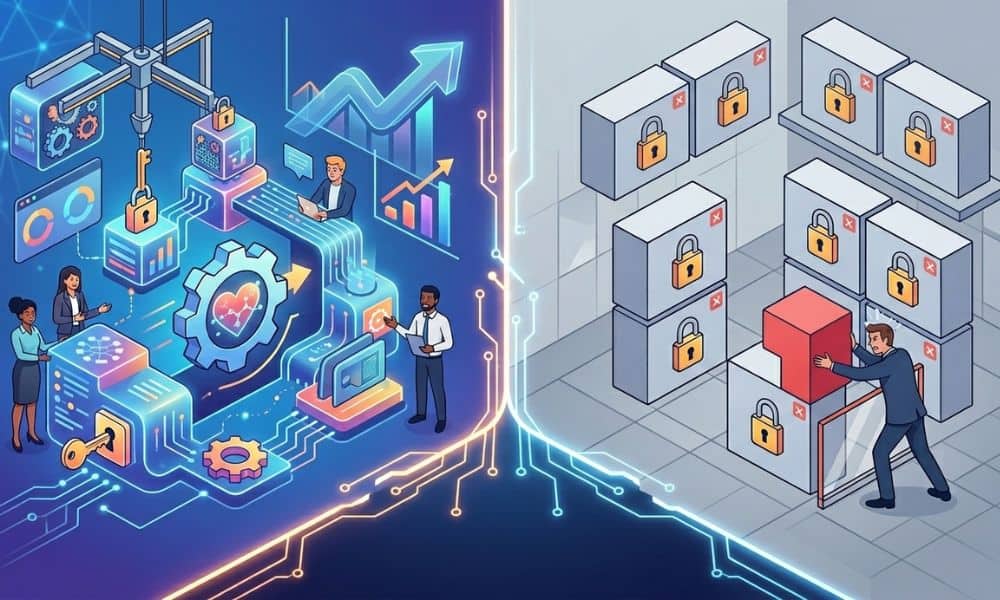
The main difference between these two approaches lies in flexibility. Custom software fully adapts to your company’s internal processes. This allows the system to accurately reflect how you operate, increasing efficiency and eliminating unnecessary steps. In this case, the software fits your business.
Off-the-shelf software, however, often works the other way around. It may require your business to adapt to the tool. If a commercial solution forces you to change processes that already work well, your company may lose agility. Some experts refer to this as “contortionism.”
Custom software allows you to maintain all the functionalities you need, while off-the-shelf solutions may lack specific tools required for highly specialized processes.
Cost and Scalability: Investment vs. Operational Expense
When comparing costs, it’s important to look at the medium- to long-term perspective, not just the initial price.
Off-the-shelf software typically has a lower upfront cost and can be implemented quickly. However, over time it may involve hidden expenses such as per-user licensing fees, renewals, and additional modules that significantly increase total cost.
Custom software, on the other hand, requires a higher initial investment and more development time. However, since it becomes your company’s asset, the cost of adding users is minimal. In the long run, it is often more cost-effective because it eliminates ongoing licensing fees.
In terms of scalability, custom software allows your business to grow without limitations. It can evolve at the same pace as your company, without being restricted by a vendor’s roadmap. With off-the-shelf software, improvements and updates depend on the provider’s decisions.
When Does Custom Software Development Make Sense?
The decision should not be based solely on budget, but on the strategic value it brings to the business.
A practical approach is the 80/20 rule: use off-the-shelf software for common processes such as accounting or email, and invest in custom development for what truly differentiates your business—your core operations.
Custom software is especially recommended when:
- Processes are highly specialized or unique in the market
- Technology represents a direct competitive advantage
- You want to avoid full dependency on a single vendor
- No commercial solutions meet your industry-specific needs
At Pentaware, we believe software should be a driver of innovation. Choosing custom solutions not only optimizes resources, but also builds a technological asset that can strengthen long-term success.
PentaWare Group SA
“Solutions that empower your business”
Previous Article
The Hardware Challenge for 2026
Latest Articles:



Follow Us on:




Begin a new chapter in technology
Discover how our team of experts can transform your business processes! With over two decades of global experience in technology and project management, we are ready to provide innovative solutions that drive your success. We are just a message away from getting started!